Start with the connections
More than one headline
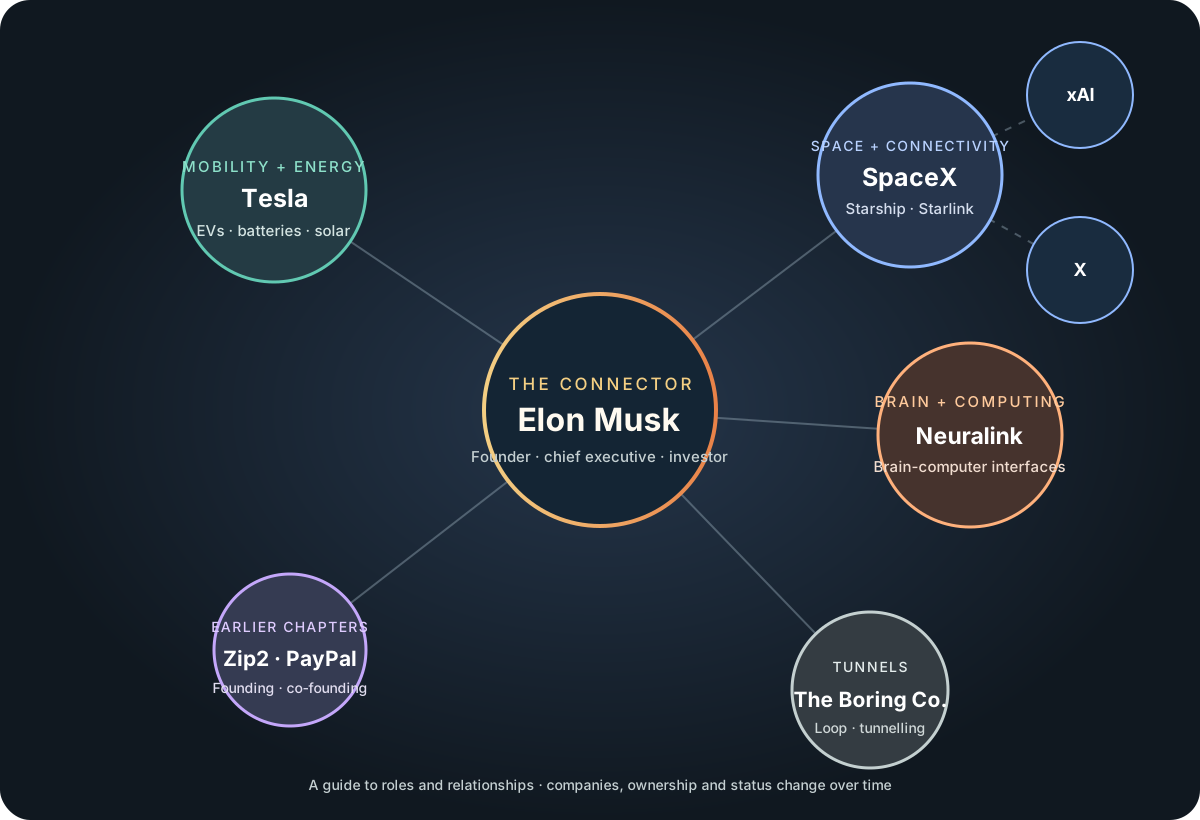
The public conversation often picks one Musk story at a time: electric cars, a rocket launch, an AI post, a brain implant. The striking thing is the breadth—and the ways some of these fields can reinforce one another.
Rockets and satellite networks make a different kind of communications infrastructure possible. Electric vehicles bring batteries, power electronics and large-scale manufacturing into everyday life. AI trained to interpret the physical world is also part of Tesla’s stated approach to self-driving and Optimus. Brain-computer interfaces ask how people might interact with computers when speech and movement are not available. Tunnels offer a separate, contested answer to urban traffic.
A note on attribution: These are large teams, not solo inventions. Musk’s role varies: founder, chief executive, investor, public advocate or some combination. The map shows connections; it does not credit him alone for the work of thousands of employees, suppliers, researchers and public institutions.
The working universe
Six frontiers, at different stages
On the road and in homesTesla: transport, batteries and solar
Tesla helped make electric cars a central part of the global auto industry. Its work now spans vehicles, charging, battery storage and solar. The company is also developing autonomy and its Optimus humanoid robot. Tesla describes Optimus as a general-purpose robot for unsafe, repetitive or boring tasks; that is a goal, not proof that a capable home robot is ready for consumers.
Tesla on AI and Optimus · Tesla investor relations
To orbit and beyondSpaceX: reusable rockets and Starlink
SpaceX develops launch vehicles and spacecraft. Reusability is central to its effort to reduce the cost of access to space. Starlink, its satellite internet network, turns that launch capability into a communications service on Earth. Starship is the company’s next-generation vehicle, with ambitions that include carrying people and cargo to the Moon and Mars. Those are demanding goals, not completed destinations.
SpaceX · Starlink
Models and public conversationxAI and X
xAI builds the Grok family of AI models and related products. X is a social platform and a place where Musk has an unusually direct public voice. In February 2026, xAI announced that it had been acquired by SpaceX; the corporate picture has therefore changed, and deserves more precision than the familiar shorthand “Musk’s companies.” The products also raise questions about platform power, moderation, model behaviour and who benefits from AI.
xAI’s acquisition announcement · xAI company and product updates
A new interfaceNeuralink: brain-computer interfaces
Neuralink is developing implanted brain-computer interfaces. Its PRIME Study evaluates an investigational system intended to let people with paralysis control external devices. This is clinical research, not a general-purpose “brain chip” available for routine use. The prospect is powerful: technology could restore a channel of agency. The medical, safety, privacy and access questions are equally real.
Neuralink study updates · PRIME Study brochure
Below the cityThe Boring Company: tunnels and Loop
The Boring Company proposes tunnels as another layer of transport and infrastructure. Its Las Vegas Loop is operating and expanding; other projects remain proposed, approved, or under construction. The idea is easy to picture, but its real value depends on capacity, cost, safety, connections to public transit and whether it helps more people move around a city.
The Boring Company’s project list
The earlier chaptersZip2, PayPal and the long arc
Before the rockets and electric cars, Musk co-founded Zip2, an online city-guide and business-directory company, and X.com, an online financial-services company that became part of PayPal. That history matters because it shows a repeated pattern: enter a difficult market, build a company around an ambitious system, and push for scale. It does not mean every later bet is destined to work.
Encyclopaedia Britannica biography
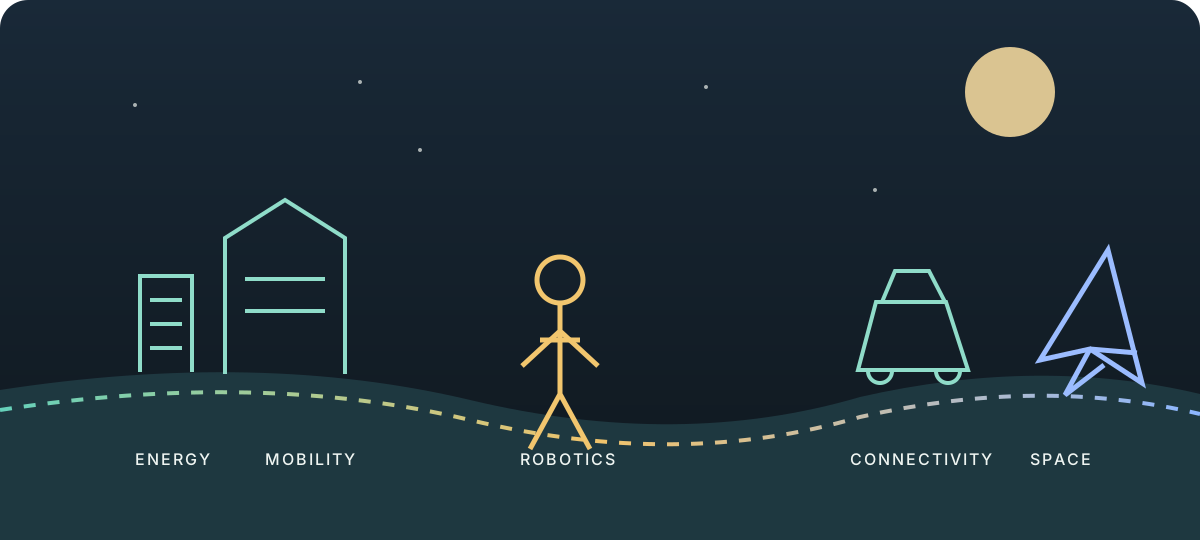
Five connected frontiers: the shared promise is capability at scale; the hard questions are who controls it and who gets to use it.
The connection that feels personal
People and robots
For me, the most compelling thread is not a machine replacing a person. It is the possibility that machines could take on work people do not want, cannot safely do, or are prevented from doing by the limits of their bodies—and what we might choose to do with the freedom that creates.
That is why Optimus holds my attention. If a useful robot could reliably handle repetitive physical jobs, it might change what a household, workshop, care setting or small business can do. The practical test is not a polished stage demonstration. It is whether a robot can do useful work safely, consistently, affordably and with people able to understand and direct it.
The same broad question appears in other forms across this map. Neuralink asks how a person can regain control of a computer when ordinary movement is unavailable. Tesla’s autonomy work asks whether software can interpret a changing physical world. Starlink asks how connectivity can reach places existing networks do not serve well. SpaceX asks whether access to space can become more routine. These are different technologies, with different evidence and risks, but each touches the boundary between human capability and technical systems.
“What could people choose to do if useful machines made more of life possible?”
That is the future-facing question I want this page to keep alive. The promise deserves imagination. The claims deserve scrutiny. A robot cooking spaghetti would be a memorable demonstration; the more important achievement would be dependable help that gives people time, choice and room to move.
A short chronology
From online city guides to orbit
1995Musk co-founds Zip2, an early online city-guide and mapping company.
1999–2002He co-founds X.com; it merges with Confinity, and the resulting company becomes PayPal, acquired by eBay in 2002.
2002SpaceX is founded with the goal of making spaceflight more affordable and advancing the possibility of life beyond Earth.
2004 onwardMusk joins Tesla as an early investor and board chair; he becomes CEO in 2008. Tesla grows from a startup into a major electric-car and energy company.
2010sSpaceX’s reusable Falcon 9 boosters and Dragon spacecraft change the company’s launch and cargo operations. Starlink begins deployment later in the decade.
2016–2023The Boring Company and Neuralink are founded; xAI is established in 2023. Each pursues a very different part of the future-facing portfolio.
2024 onwardTesla presents Optimus as a general-purpose humanoid robot in development. xAI’s 2026 announcement says it was acquired by SpaceX, bringing AI into closer corporate alignment with rockets and satellite infrastructure.
This is a selective guide, not a complete corporate or personal biography. Executive roles, corporate structures and project statuses change; links below point to primary sources where possible.
Admiration with open eyes
The questions that belong beside the ambition
Large projects can widen human possibility, and concentrate power at the same time. A serious tribute should hold both facts. Who makes the difficult decisions inside these companies? What do workers, customers and communities gain? What happens when systems fail? How are personal data, brain data and public speech protected? Which promises have moved from demonstration to reliable everyday service—and which are still forecasts?
There are real criticisms and controversies around Musk’s leadership, public statements, working practices and the effects of his platforms. They are part of the public record and belong in a fuller account. This page begins from my admiration for the scale of the ambition; it does not treat admiration as evidence that every decision is right or every forecast will come true.
How I’ll keep this useful: distinguish a working product from a research study, a plan from an operating service, and a founder’s ambition from a team’s achievement. I’ll update this guide when the companies’ own filings or project records materially change the map.