A working accommodation experiment · Australia

Accommodation
Plan D.

Affordable land, ordinary shelter, shared infrastructure—and enough imagination to make a country town workable again.

Current statusExploratory research · manually updated
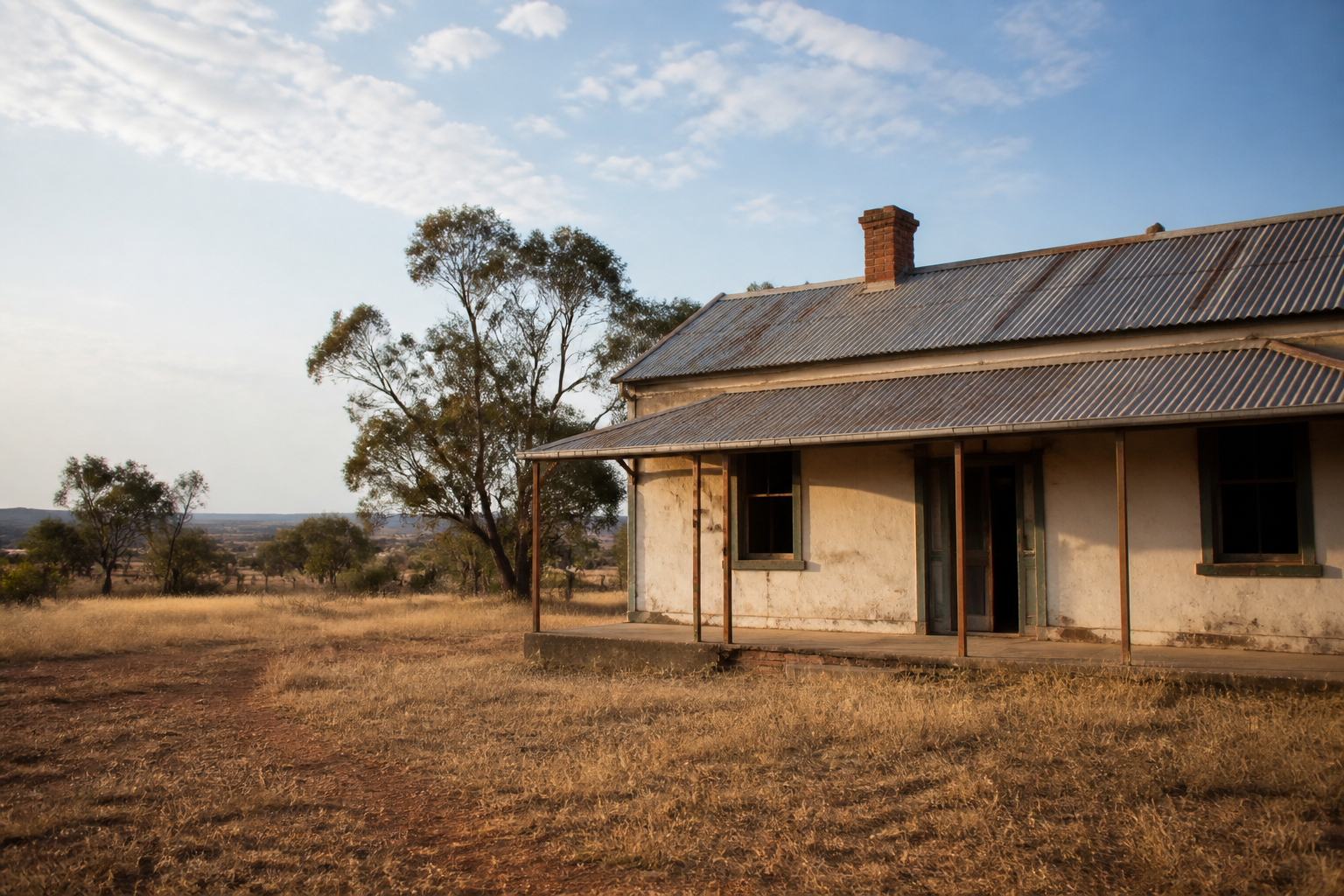
Weathered country house beside dry grass and eucalyptus trees

01 / The proposition

Start with what
already exists.

Plan D asks a practical question: could affordable vacant land, empty houses and neglected town edges become a humane accommodation network—one small place at a time?

It is not a property listing service or a promise that a tiny house can be parked anywhere. Each place needs its own checks: title, zoning, flood and fire risk, water, wastewater, power, access, building approval, local services and the willingness of neighbours and councils.

The cards below are research leads, not live listings. Prices, availability and approvals must be checked with the relevant owner, council and regulator before anyone spends money.

02 / Field map

A manually updated
map of possibility.

Begin with places where a modest intervention might reconnect housing, care, work and local life.

Update protocol: add a place only after a human check of the local plan, essential services, travel time and a named source. Last edited 29 August 2026.

03 / Property leads

Not listings.
Questions with addresses.

South Australia · example

Booborowie

A small Mid North locality is a useful test case: a country-town setting where a vacant dwelling, modest block or underused service could be more valuable as part of a network than as an isolated asset.

Look for
Existing house, shed or serviced town block
Check first
Mid Murray Plains Council planning, water, wastewater, road access and bushfire exposure
Why it matters
Can a place regain residents without pretending rural land is consequence-free?
Council research starting point ↗
Western Victoria · search brief

Town edge / small second home

Look near established services rather than remote acreage: a house with a repairable shell, a legal second dwelling, or a block where a small home may be permitted.

Check first
VicPlan zone, overlays, building permit, wastewater and fire access
Useful lead
Small second dwellings up to 60 m² may be easier in many Victorian settings, but controls still apply.
Read the Victorian guidance ↗
South Australia · town fabric

Vacant shop / rear yard

Could a former shop, hall or service building hold a shared kitchen, workshop, office or accessible short-stay room while homes are repaired around it?

Check first
Change of use, heritage, fire safety, toilets, insurance and who owns the rear lane
Possible role
Community anchor before a full housing project
Research lead · no address yet

04 / Make the place work

Housing is a
whole system.

01

Water first

Rainwater capture, storage, drinking-water testing, greywater design and a lawful wastewater solution matter more than the romance of cheap land.

02

Power that stays on

Solar, batteries, efficient appliances and a repairable backup plan can make a small home resilient without hiding the embodied cost of equipment.

03

Reach the essentials

Map the trip to a general store, school, pharmacy, GP, hospital, rail or bus. Shared autonomous electric transport only helps when the service model is real.

04

Build from leftovers

Caravans, shacks, tiny homes, recycled timber, second-hand windows and greenhouse frames can be useful—if they are safe, durable and lawful.

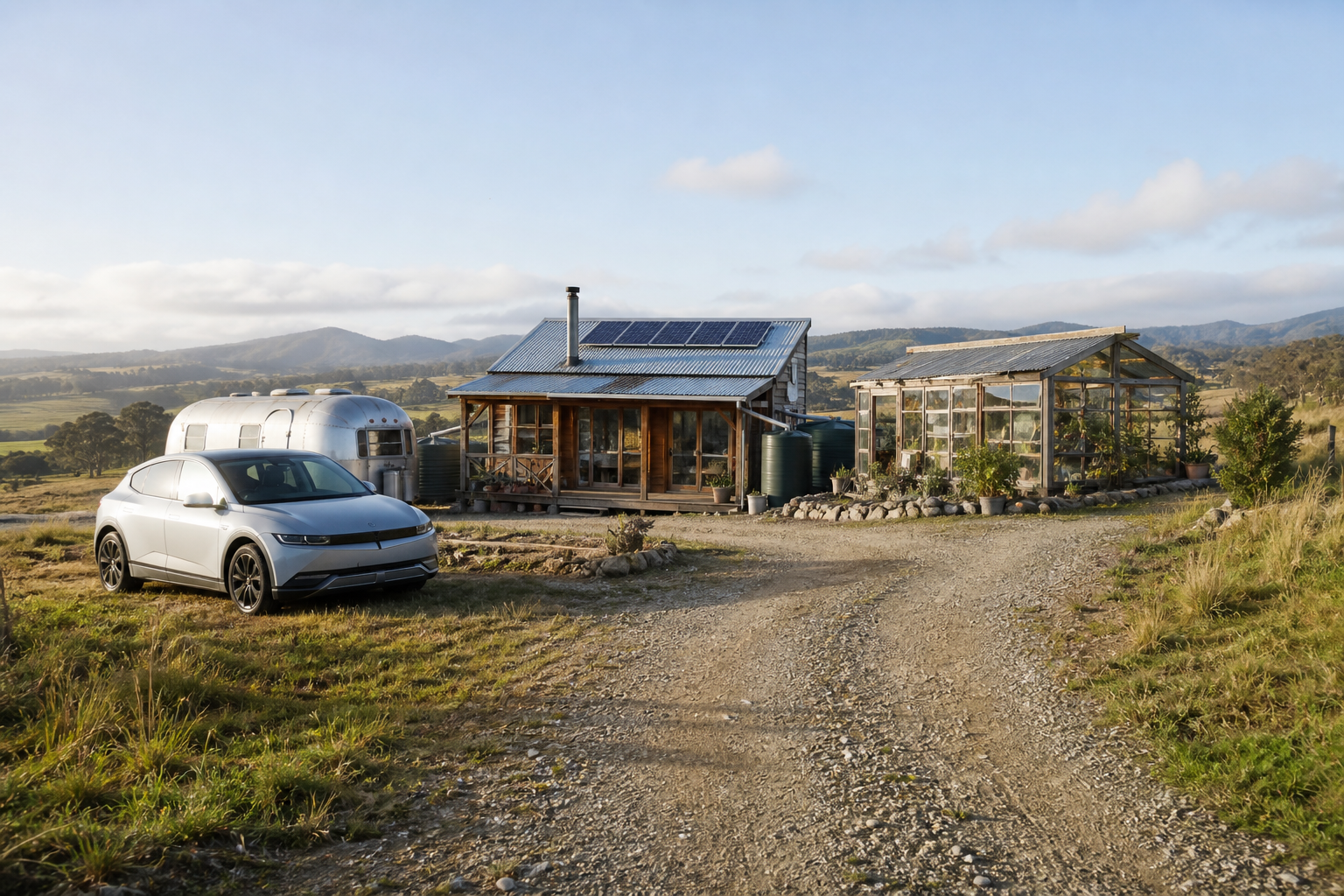
Small rural settlement with tiny home, caravan, greenhouse, rainwater tanks and solar panels
Illustrative image: a shared settlement is an operating system, not just a collection of small dwellings.

05 / A possible site day

Small homes.
Shared capacity.

One repaired cottage might sit beside a caravan used during construction, a tiny home for a resident or carer, a greenhouse, tool library and common room. The aim is not maximum density. It is enough shared capacity that no one person has to carry every cost.

After the agentic turn, the work could include autonomous site surveys, procurement, scheduling and transport—while residents keep authority over consent, privacy, priorities and the meaning of home.

06 / How it might be funded

Many small
bridges.

Community ownership

A cooperative, community land trust or registered housing provider could hold land for the long term, with residents contributing money, work, care or local knowledge.

Kickstarter as proof

A Kickstarter campaign could fund the research, a public map, a feasibility pack or one visible prototype. It should not pretend that pledges alone buy land or guarantee housing.

See the Free Earth Manual campaign ↗

Grants + patient capital

Regional infrastructure, community facilities and affordable housing finance may fit different parts of the plan. A grant can pay for a study; it rarely replaces a viable operating model.

Regional precincts program ↗

07 / The next useful step

Find one place
and do the checks.

Choose one town, one property type and one accountable local partner. Publish the unknowns alongside the hope: what the land costs, what water costs, who maintains the road, which medical service is reachable, what permission is needed and who can say no.

Research sources: Victorian small second dwellings · Victorian rural residential guidance · Housing Australia social finance · South Australian planning and property

This is a living proposal. No property is represented as available, approved or acquired.