Design
Find more efficient ways to generate, store, move and use energy, and to make durable goods with less waste and pollution.
Social ills · Foundational essay
Hope with conditions
And could it give people who care about equality, animals and the planet something stronger than another appeal to consume less?
The question
People on the political left, environmentalists and animal advocates have spent generations naming harms that are not mysterious. We know that fossil fuels warm the climate. We know that industrial production can foul water and air. We know that animals are killed because our food systems are organised around producing meat and dairy. We know how much effort goes into keeping homes warm, moving goods, growing food and maintaining the things we depend on.
Knowing what is wrong has not been enough. The alternatives can be expensive, inconvenient, unreliable, politically contested or hard to build at the scale people need. A moral appeal asks people to accept a cost now for a benefit spread across others and the future. Often, the people with the least room to absorb that cost are asked to make the biggest sacrifice.
Superintelligence could change the practical side of that equation. If SI can help design, coordinate and operate energy, transport, food, manufacturing and care systems that work much better, some old trade-offs may stop being unavoidable.
Illustration and scene

The promise
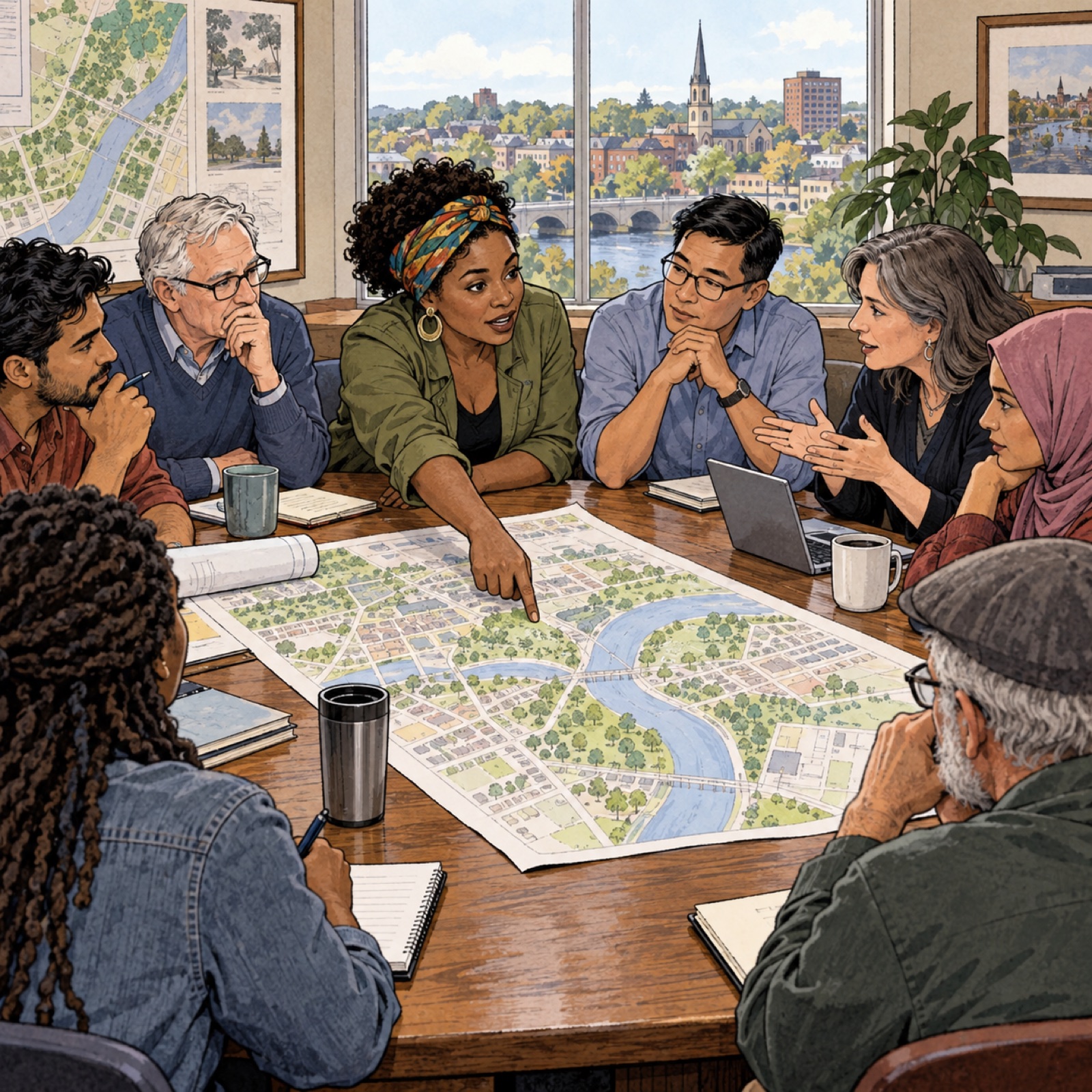
Imagine power generated with very low emissions, stored and distributed intelligently; buildings that need little energy to stay comfortable; transport that moves people and goods with far less waste; factories that recover materials rather than treating pollution as somebody else’s problem; and farms that use water, land and nutrients with precision.
That future would not be impact-free. It could, however, make ordinary life close to pollution-free in many of its routine operations. Energy and materials could be directed where they help, and wasteful processes designed out instead of managed after the damage is done.
The crucial change is that ecological care would no longer have to mean permanent household austerity. We could want clean air, quiet streets, a stable climate and healthy landscapes because they make life better—and have systems that deliver those things while also making energy and useful goods widely available.
The animal question
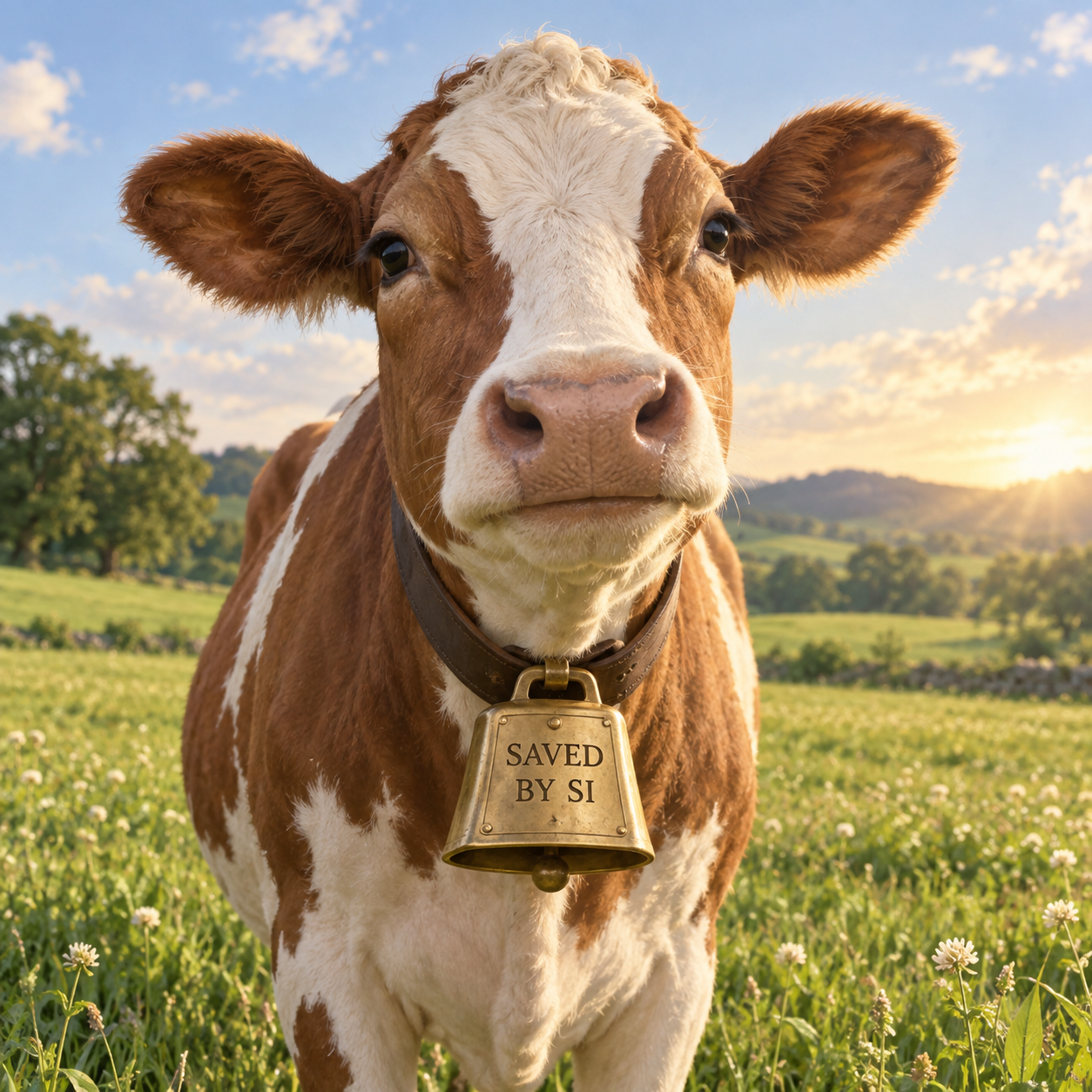
This is where my own thought about vegetarianism leads. As a child, I was given goat’s milk or cow’s milk. Butchering animals for food belonged to the practical world of keeping people alive. It was easy to assume that this would always be part of life because, for most people, food cannot be an abstraction: it has to nourish us, be available and fit the lives we actually live.
But if people can be fed well without killing animals, would many of us still want the killing? I find it hard to imagine that we would. That could be a remarkable social change: a source of suffering removed from ordinary life, not through shaming people who eat meat, but because a better option is available, enjoyable and dependable.
Plant-based foods already offer some alternatives; precision fermentation and cultivated meat are areas of research and development, not guarantees of cheap, universal replacement. We still have to ask what is nutritious, affordable, culturally welcome and ecologically sound. Animal-source foods also make important nutritional contributions for some people and populations. A humane transition has to answer that honestly, and support those whose livelihoods and knowledge are tied to existing food systems.
The hopeful question is not “will everyone become vegetarian?” It is whether anyone should have to kill animals for food when good alternatives can meet people’s needs—and whether future societies will choose to make those alternatives accessible.
What SI could change
Find more efficient ways to generate, store, move and use energy, and to make durable goods with less waste and pollution.
Match production to actual need, maintain infrastructure before it fails, and reduce the friction that keeps useful alternatives out of reach.
Make better housing, food, mobility and care available beyond those who can pay a premium or absorb transition costs.
What intelligence cannot decide
SI does not automatically care about animals, climate justice, workers, Indigenous sovereignty or future generations. It can identify means; people and institutions still contest ends. A system can be technically efficient and still concentrate ownership, remove livelihoods without support, surveil the population or impose a definition of “good” that people never chose.
Nor does the word “superintelligence” tell us who controls the machines, energy, land, data or productive capacity. A clean abundant system could be run for shared benefit—or used to deepen dependence. An agent may help a person act, but a more capable agent is not the same thing as democratic authority or public consent.
So the question is not only whether SI could solve problems. It is who gets to name the problem, who chooses the solution, who can refuse it, and who receives the benefits. Privacy, accountability, freedom of association, meaningful work and the power to challenge decisions are part of a humane technical system, not optional decorations.
A real answer?
For people who have fought for a cleaner, fairer and less cruel world, superintelligence can sound like an answer at last: perhaps we could stop choosing between a decent life and a liveable planet; perhaps food could nourish us without routine killing; perhaps clean systems could become the obvious default instead of a luxury.
I think that possibility is worth taking seriously. But SI will not deliver it simply by being clever. We would have to direct capability toward these outcomes, make the benefits broadly available, and keep control answerable to the people affected. Some ills arise from material limits; others arise from power, fear, exclusion and what people choose to do to one another. New capability can make repair possible without making it automatic.
That may be the most hopeful version of the claim: not that superintelligence cures society, but that it could remove many of the excuses and constraints that have kept us from curing problems we already know how to name.
Sources and evidence boundary
FAO estimates livestock emissions at 4.3 gigatonnes of CO2-equivalent in 2023, the largest single component of agrifood-system emissions in its inventory. The same UN food agency notes that animal-source foods can provide important nutrients, particularly for some populations facing undernutrition. Those facts establish real trade-offs; they do not determine a single future diet. Claims about SI’s future capabilities here are proposals and possibilities, not forecasts.
This essay is an argument about possible futures, not dietary or medical advice.