The remembered life
We first meet the narrator in memory: a person shaped by the ordinary demands of their time, with people to love, work to do, costs to meet and hopes they have not yet fulfilled.
End Up Here · the Future Memoirs format
A finished editorial framework
A Future Memoir is told by someone living after a great change. They look back on the life they lived before it: the habits, pressures and hopes that belonged to an earlier world.
What the name means
The series begins with a person we can recognise and follows them through a changed civilisation. “Here” is the particular life they have reached: their place, relationships, work, pleasures, losses and unfinished business. The destination is not a promised utopia. It is a human life, made specific.
“Future Memoirs” names the storytelling form. A narrator speaks from their own later present and remembers an earlier life. The story lets us feel the distance between those two worlds through what one person had to do, what changed, and what they chose to do next.
The guiding idea: the future is the setting and pressure; the person is the subject.
How each story moves
We first meet the narrator in memory: a person shaped by the ordinary demands of their time, with people to love, work to do, costs to meet and hopes they have not yet fulfilled.
One change enters daily life through practical consequences, surprises, losses and new choices. The story follows what the person actually experiences instead of listing inventions.
From the narrator’s later present, we see what became easier, what stayed difficult, what mattered differently and how they used the time and agency they gained.
One life, remembered in two places
What makes it a memoir
The narrator is not reporting from a neutral distance. Memory carries affection, regret, humour, uncertainty and the meanings they could only see later. Their earlier self may have misunderstood what was happening. Their later self may still not have everything figured out.
Technology appears where it touches the life: in a changed journey, a vanished bill, a machine that gives someone time back, or a new kind of dependence. The story asks what a person does with the change, and what remains irreducibly theirs.
The story’s answers
A person remembers from a later world they now call home.
Their earlier world shaped how they earned, travelled, cared and spent their time.
A specific change first becomes visible in an ordinary day.
That change brings real freedom and new complications, both shown in the story.
Love, responsibility, grief and uncertainty continue to matter.
Looking back, the narrator can name what their earlier self could not yet see.
Fiction and forecast
These are imagined lives, not predictions, documentary accounts or claims that the described changes have already happened. Their purpose is to make possible futures concrete enough to examine: what might change, what might remain, and what kind of life people could build.
Video essay · an imagined future memoir
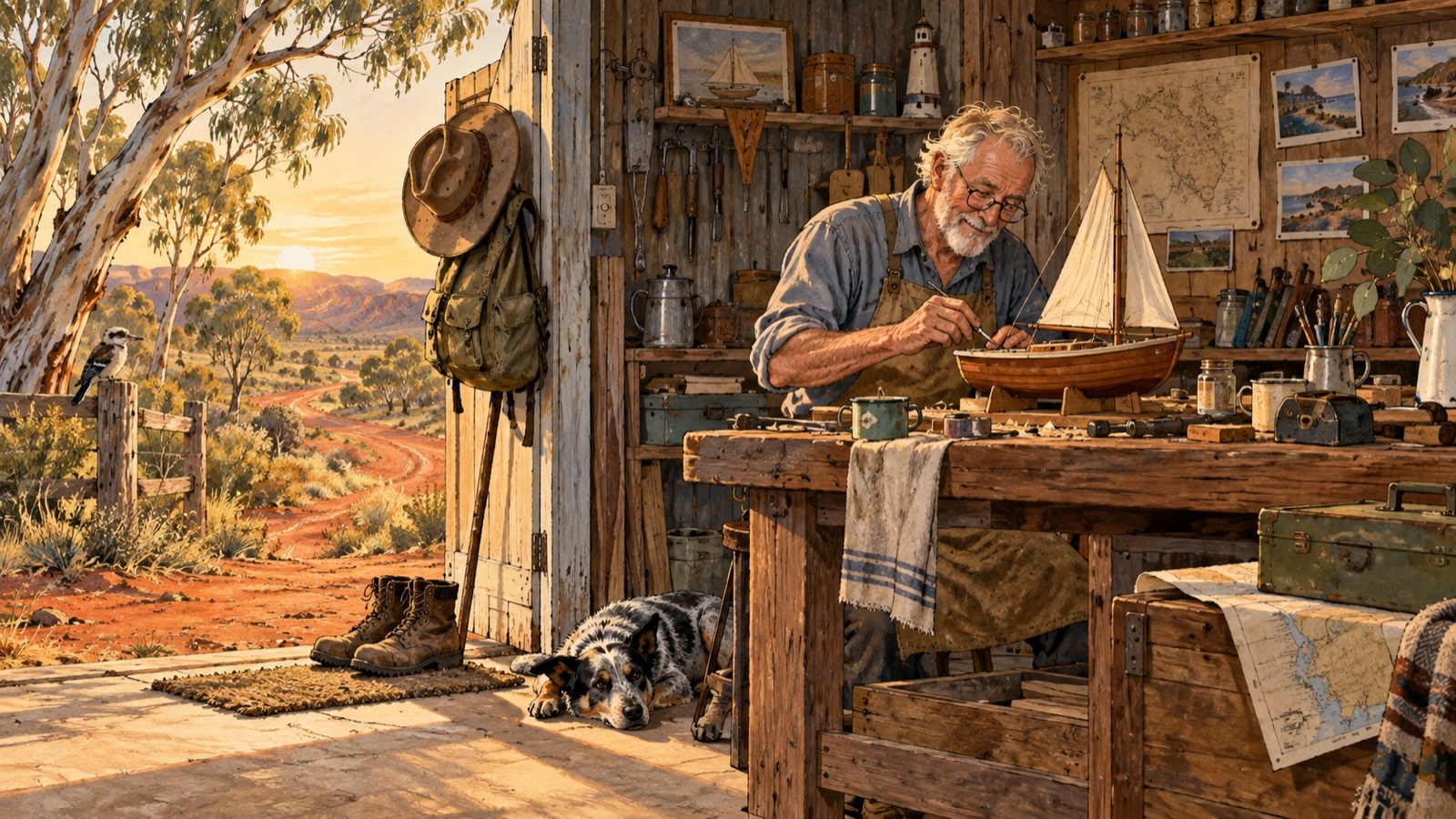
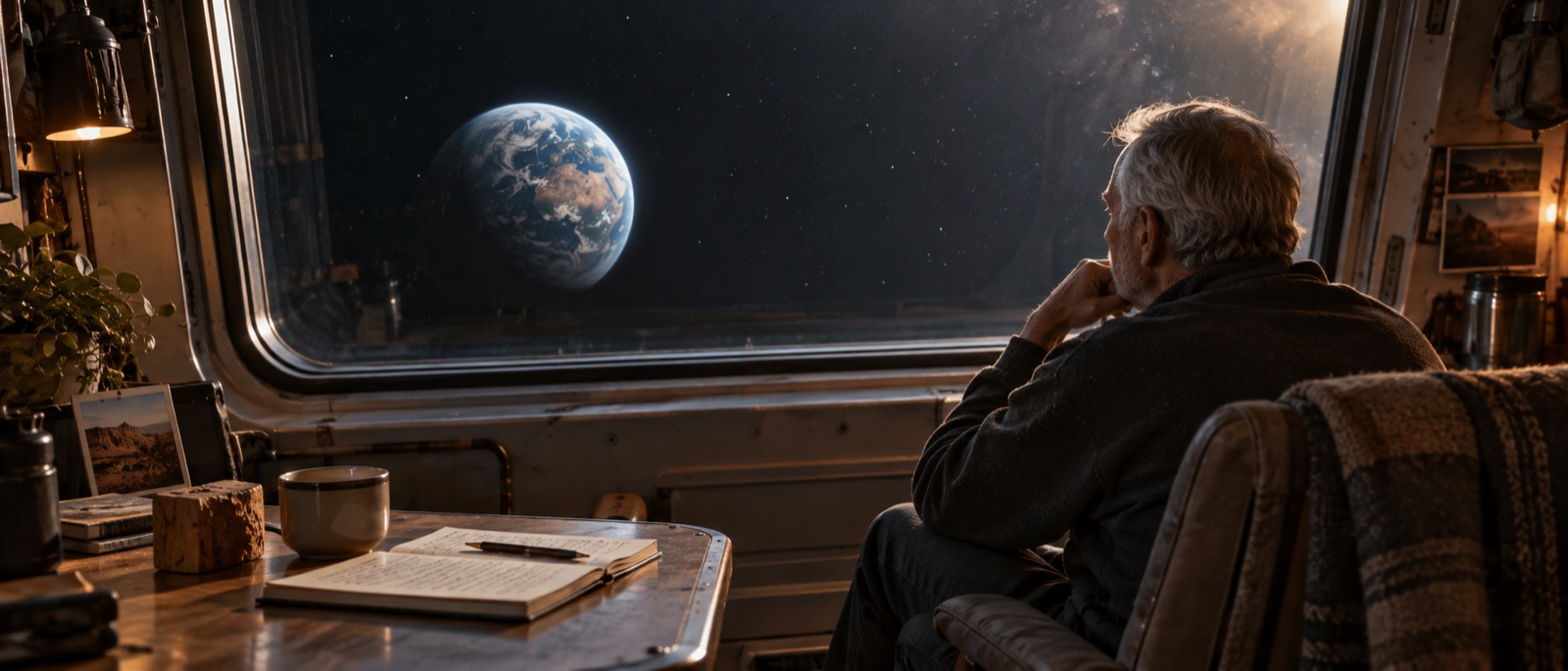
A retired man finds his way back into the day by building a small workshop in South Australia. The walking that follows carries him eventually to America—and to a starship.
Story note: this is a fictional possibility told in the first person, not a documentary account. The narration and illustrated scenes are AI-generated; the protagonist is an approximate illustration, not a photographic likeness.
A first example
The Workshop at the End of the Road follows a retired man whose days have lost their shape. He builds a workshop in South Australia; the work and the walks that grow from it carry his life far beyond what he expected. Its journey to America and a starship is an imagined extension of that life, told retrospectively as fiction.
Video essay · An imagined future memoir · Published 3 October 2026
At nine, she wanted to live in the future. Ten years later, her clothes, apartment and city express a life she chose.
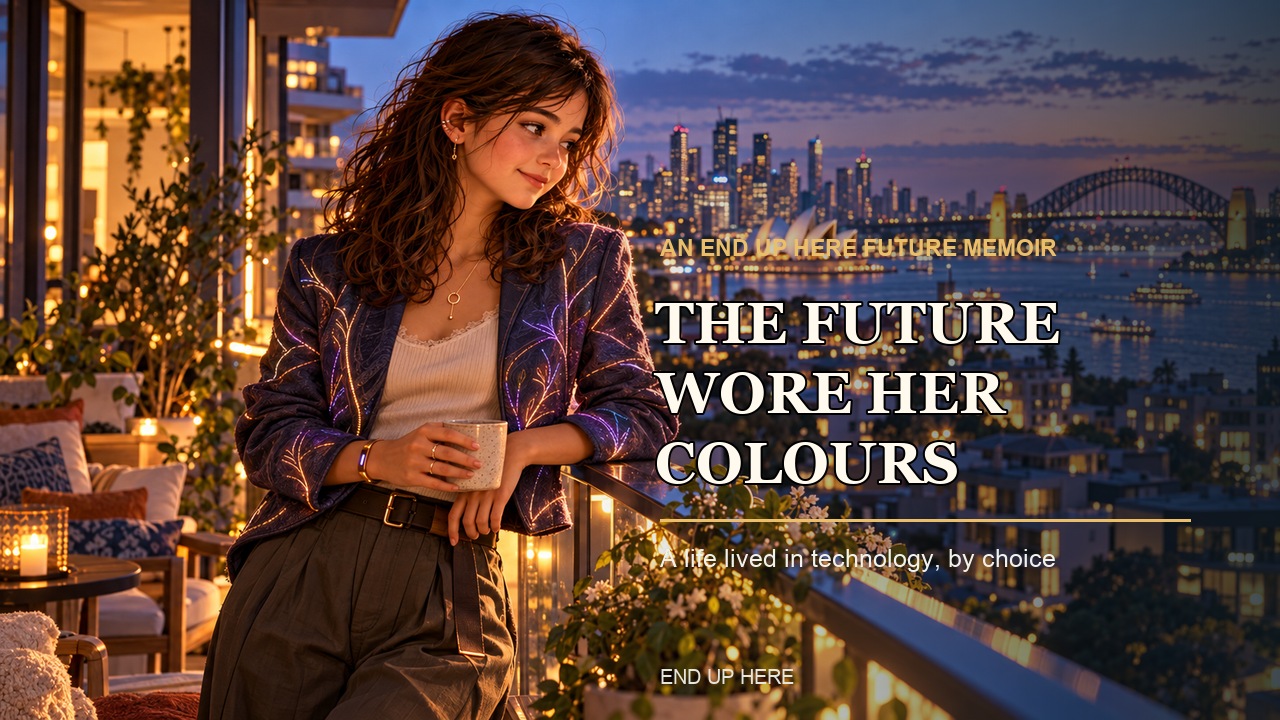
Story note: This is a fictional future memoir set in 2036, not a prediction or documentary account. The narration and scenes are AI-generated; the protagonist is a non-specific fictional character.
Video essay · An imagined future memoir · Published 4 October 2026
At ten, he wants technology to be part of everything he wears and everywhere he lives. By his twenties, responsive clothes, a high-tech apartment and a powerful machine for travelling across open ground have become part of the life he is choosing.
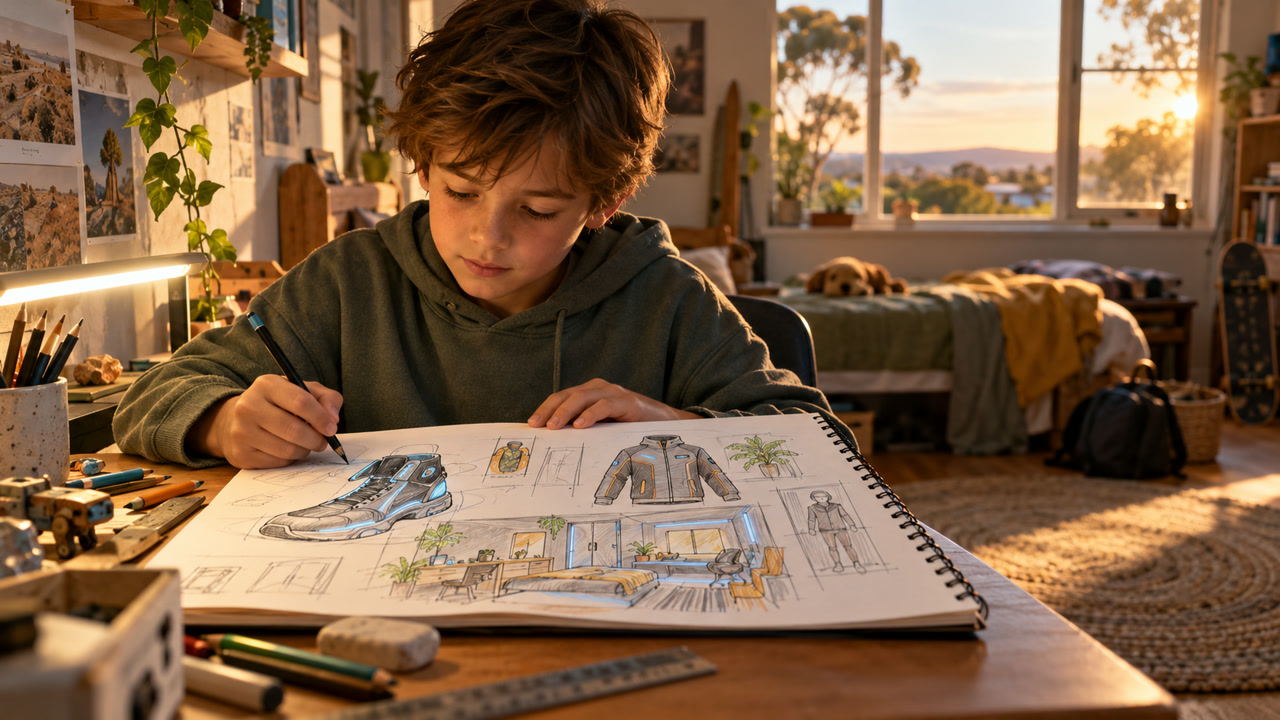
Story note: This is a fictional future memoir spanning 2026 to 2040, not a prediction or documentary account. The narration and cinematic scenes are AI-generated; the protagonist is a non-specific fictional character.
Video essay · An imagined future memoir · Published 6 October 2026
At twelve, Mara tries a temporary botanical design. Years later, she considers a lasting change on her own terms. Her story asks what makes a choice genuinely hers: time, information, trusted support, freedom from pressure, and the ability to refuse.
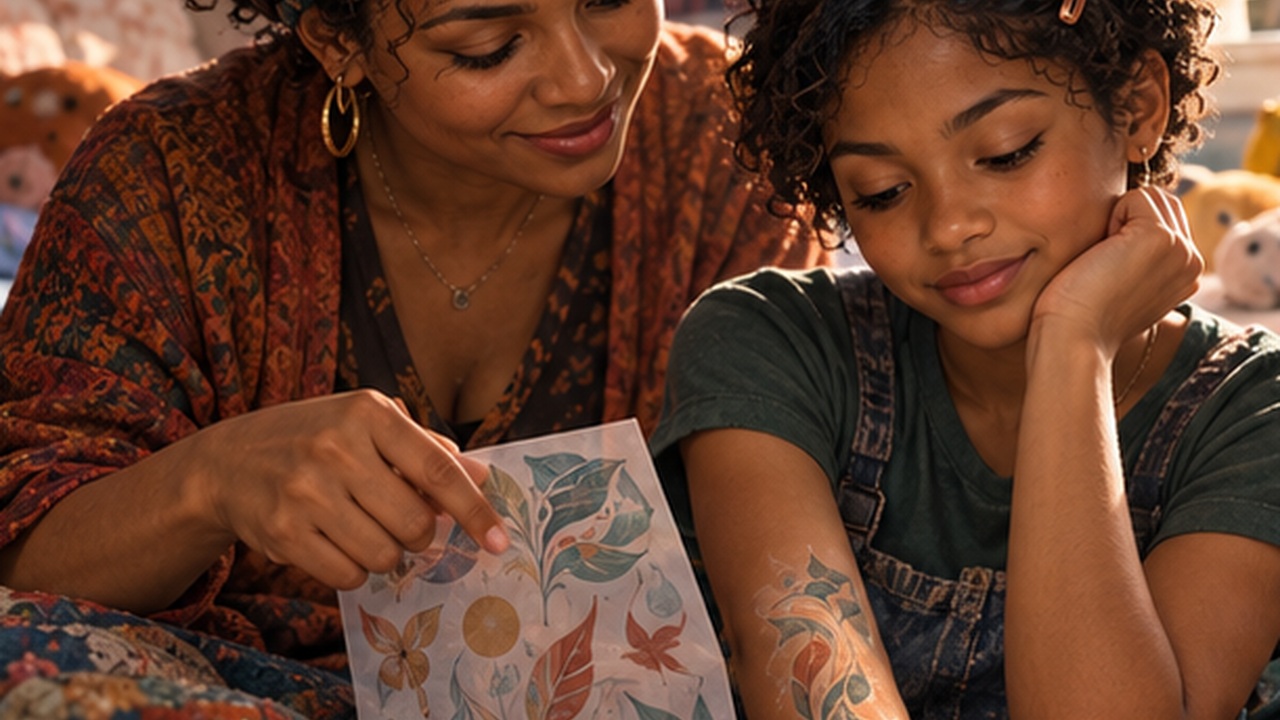

Story note: Mara and her future are fictional. This is not medical advice or a prediction. The childhood scenes show a non-invasive, removable design. The adult consultation and body modification are illustrative, not real events. The story refers to Article 12 in UNICEF's child-friendly Convention on the Rights of the Child as context for listening to children; it does not prescribe a body-modification decision. Narration is synthetic and the visuals are AI-generated.
What does it mean to choose a change to your own body? And who gets to say when that choice is yours? This is Mara’s story. She is fictional. The future around her is imagined too. At twelve, she is not asking for a permanent mark. She is curious about colour: a small botanical decal on her forearm, then a different one next week. Her aunt sits beside her while she chooses. No one calls the choice silly. No one tells her this must become part of who she is. The decal is temporary. That is exactly why it works. Mara can try an idea, live with it, and take it off. One afternoon she peels it away before school. The decision is ordinary, private, and entirely hers.
It would be easy to turn this into a story about what girls want. That would miss the point. Mara is one person, with her own reasons, and those reasons change. When she is twelve, the important thing is not that she gets to decide everything alone. It is that the adults around her take her seriously, explain the boundaries, and let her participate in a decision that affects her. Article 12 of the Convention on the Rights of the Child says children’s views should be heard and given due weight in matters affecting them. That principle does not answer every question about a body. It changes how the question is asked. The future can make a new look effortless. It cannot make trust effortless. That still takes time, conversation, and room to say no.
At eighteen, Mara fills sketchbooks with shapes that travel across a shoulder and disappear beneath a sleeve. She is drawn to the movement of them: leaves, tide-lines, the uneven rhythm of a hand-drawn curve. She does not rush to put the design on her skin. Some friends make permanent choices. Others change their minds. Mara’s notebook gives her a place to explore without turning every thought into a commitment. That pause can look like hesitation from the outside. From inside, it is a form of agency. A person does not prove that a choice is meaningful by making it irreversible. Sometimes the meaningful choice is to wait until the image feels like hers, rather than like a trend, a dare, or someone else’s expectation.
Years pass. Mara is thirty now. The old sketches are still there, mixed with new ones. She has settled on a pattern, but she has also learned to ask what the pattern would mean on an ordinary Tuesday, not only in the bright moment when it first seemed beautiful. She talks with a qualified practitioner about design, placement, permanence, possible complications, and what removal would involve. This story does not give medical advice or promise that a future technology makes any body change safe. The conversation is part of Mara’s imagined decision, not a guarantee about real services. She listens. She asks for time. She takes the design home. Later, after considering the costs and consequences, she chooses a small version of the pattern on her upper arm. The decision is not a dramatic reveal. It is one detail in a life that was already hers.
Choice does not happen in a vacuum. A future market could sell modification as self-expression while quietly rewarding one narrow look. Friends, employers, family, fashion, and algorithms could all lean on the same person in different directions. Making a change easier to access would not automatically make it easier to choose freely. Reversibility matters, but it is not magic. A removable surface design may still cost money, time, privacy, or attention. A permanent choice can carry consequences that no advertisement can explain away. And access will not be equal if only some people can afford careful advice, skilled work, or a safe way to change course. So the useful question is not simply, “Can technology let us alter ourselves?” It is, “Can people make these choices with enough information, support, freedom from pressure, and the genuine ability to refuse?”
Mara’s story does not tell us what girls should want. It asks what kind of future would let each person decide for herself. At twelve, that meant a temporary design she could peel away. At eighteen, it meant time to draw without committing. At thirty, it meant weighing a permanent choice and accepting that no one else could make it meaningful on her behalf. The parts she chose were never the whole of her. The freedom to change, to pause, to refuse, and to be taken seriously mattered just as much as the visible mark. If body-changing technology became commonplace, what protections would help a person distinguish their own wish from the wishes being sold to them?